Hiragana Trial

Reading comes before writing.

Hiragana that starts from sound, for ages 3–5. Three to five minutes a day.

Learn by sound · Reading first, writing later · Three to five minutes

  • No sign-up
  • No ads
  • No tracking
  • Nothing to install

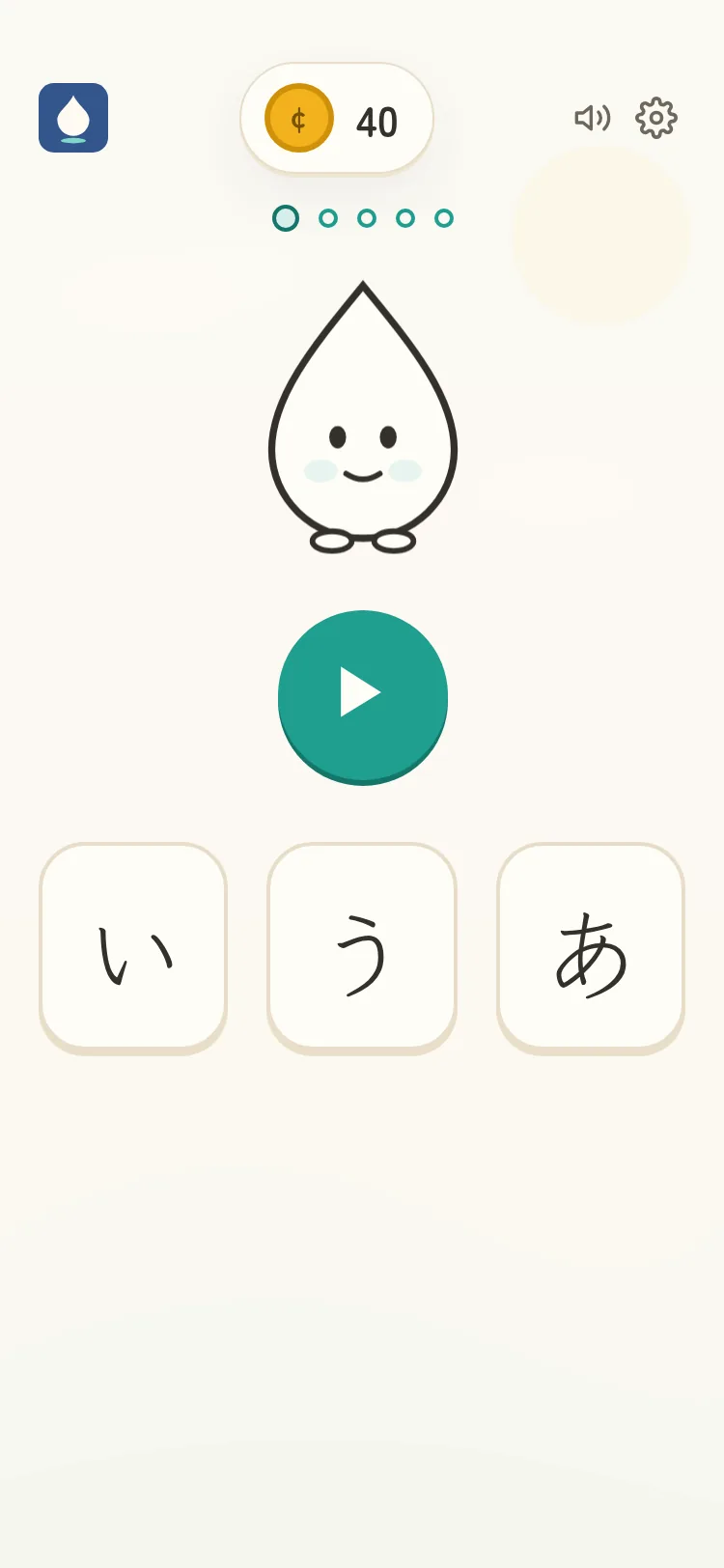
ListenChooseTrace(about 30 seconds)

Want to read first?
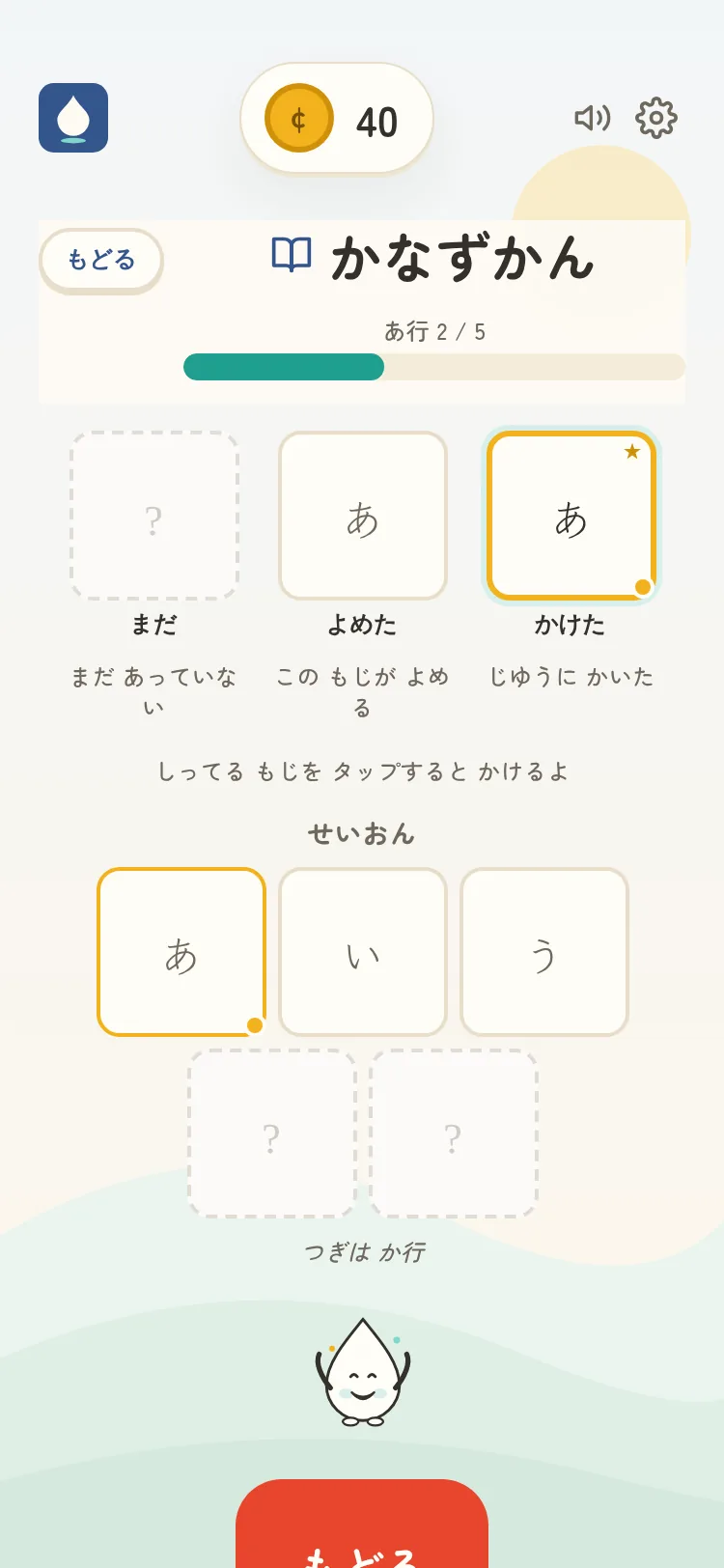
The kana book: only the letters you can read are open

A kana book that tracks "can read" and "has written" as two separate things.

Three things, before you start

  • Learn by sound

    Every character carries a recorded voice, so a child who cannot read yet can still play alone.

  • Reading first, writing later

    Tracing is never a gate. A child traces a character only after they can already recognise it.

  • Three to five minutes

    Five questions per session — a couple more if you miss one, still short enough to finish before a three-year-old runs out of attention.

A note for parents

  • There are no ads. Not one.

  • Zero third-party trackers, zero analytics SDKs, no cookies.

  • Every feature works without an account. In that mode progress stays on the device and nothing is sent to our servers.

  • A child's account has no email field at all.

Why we don't start with writing

A three-year-old's hand cannot yet write .

What a hand can do, and when

Copying a circle comes at three, a diagonal line at four, and crossed lines and closed curves that change direction at four and a half to five. あ is three strokes and needs both.

  • age 3
  • age 4
  • age 4½–5
What a hand can copy changes with age. The shapes あ needs arrive on the right-hand end.

あ = 3 strokes

  • stroke 1

  • stroke 2

  • stroke 3

    crossing + direction change
あ is three strokes. Only the third is a closed curve that crosses itself and changes direction (dashed ring = the crossing).

In Japan, handwriting is taught from age six

Reading develops years earlier. Reading before writing is not our invention — it is the standard order.

ReadingWritingYear 1 (handwriting instruction begins)

Reading before writing is not our policy. It is the standard order in Japan.

We got this wrong first

Our first version let a child retry a stroke four times, then passed them anyway. The system already knew the task could be impossible — and still made them fail four times before admitting it. Tracing now sits on the reward side instead.

Top: the first version — four rewrites per stroke, then passed without judging. Bottom: today — tracing sits on the reward side.

We rebuilt it so that not being able to write is never a reason to be stuck.

Start free

What's in here

  • Choosing a letter from three after hearing the sound

    150 characters — 104 hiragana (46 basic, 25 voiced, 33 contracted) and 46 katakana.

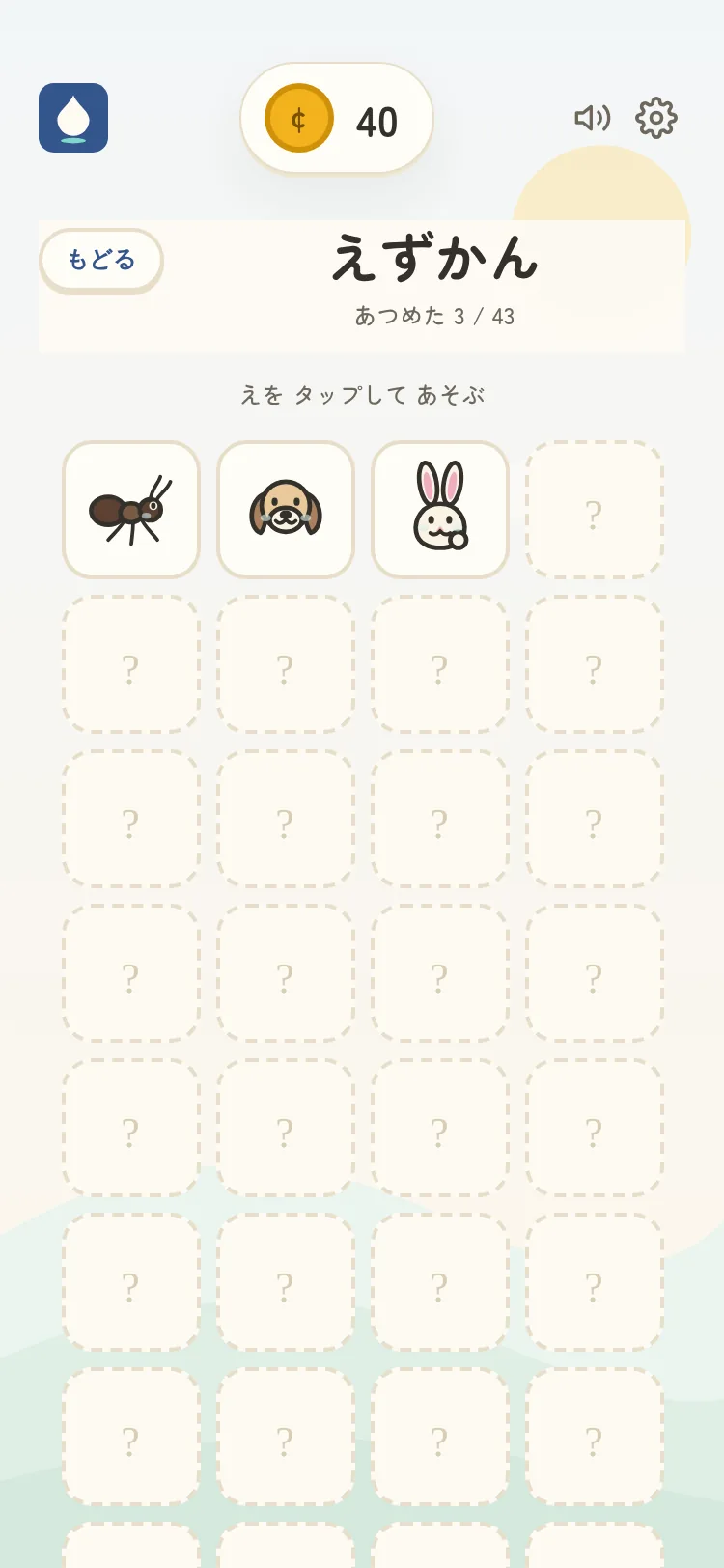
  • The picture book of collected words

    43 picture words that tie a sound, an image and a character together.

  • The kana book: only the letters you can read are open

    A kana book that tracks "can read" and "has written" as two separate things.

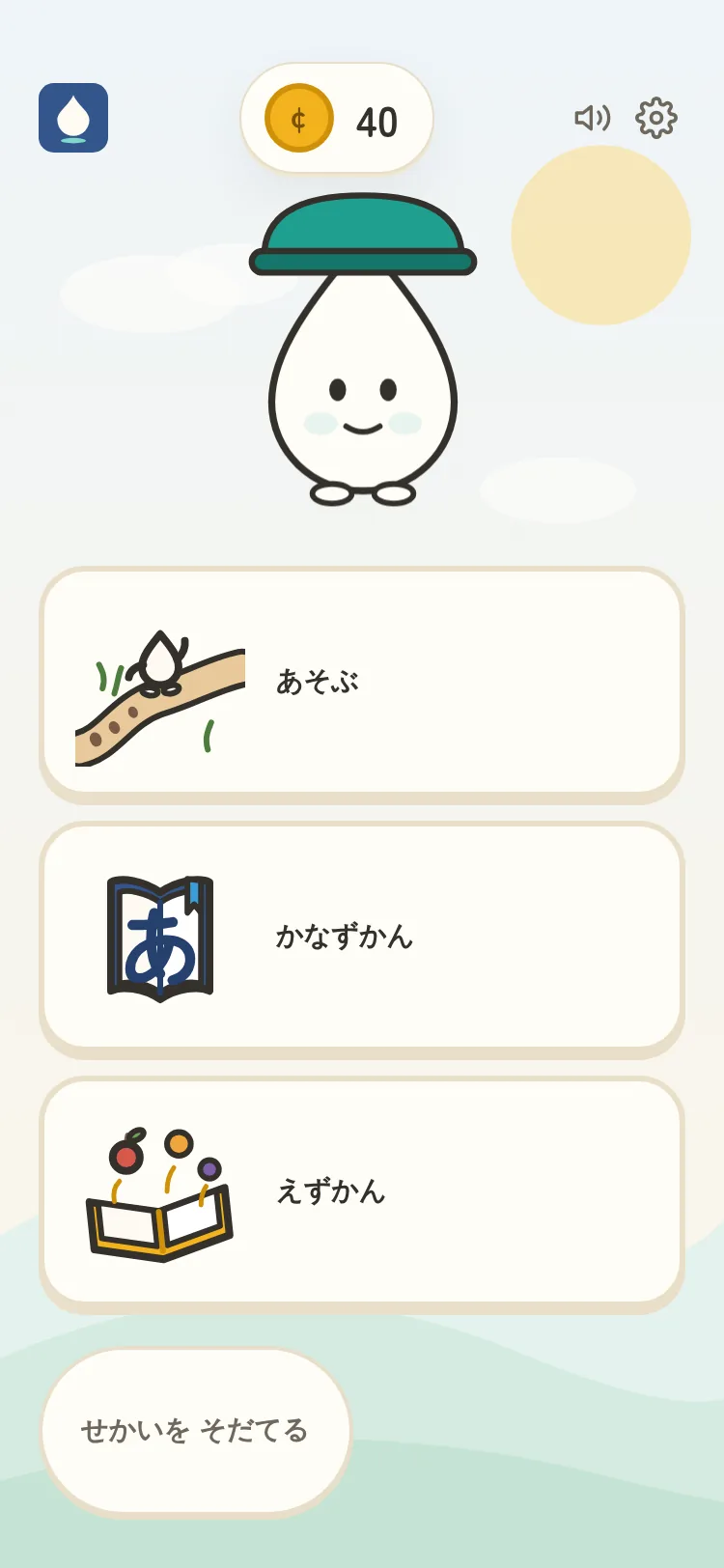
  • Home: Sumi in a cap, and three places to go

    Sumi, plus stamps and outfits to collect.

Start free

We'll write when something new lands

About once a month. Unsubscribe any time.

We use your address for this newsletter and nothing else.

By signing up you agree to our Privacy Policy.